Archive for the ‘Synthesizers’ Category

Synthesizer Programming Pulse Demo: Roland M-OC1 (1995)

Thursday, August 13th, 2026

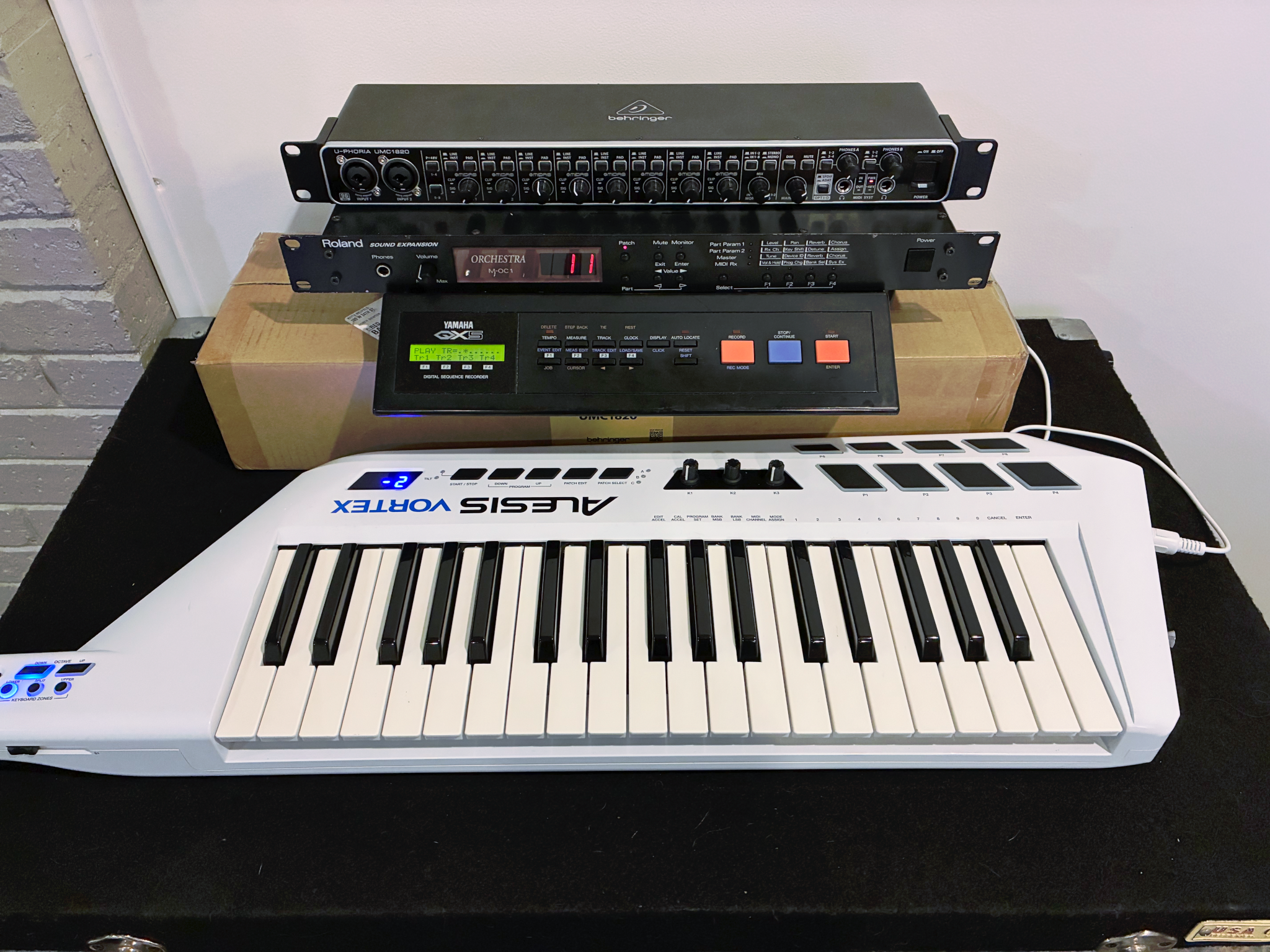
The dark horse in my pulse sound programming demo is my Roland M-OC1 Sound Expansion / Orchestra module, built to provide a library of orchestral sounds for studio work. Let’s just jump right to the finished sound sample and then I can tell you about how to get there:

Final mix

“Cheaty McCheaterpants!” I hear you cry. “You have multiple instruments playing there — where’s the challenge in that?!”

Well, this whole series is about how to achieve as close as possible to a particular imagined pulsing sound using the particular features (or working around the particular limitations) of different synthesizers; and this one has particular features that are particularly well-suited to this particular task.

Roland M-OC1 orchestral sound module

(rackmount module second from the top)

Features:

  • 28-voice polyphony across 8 “Parts” (instruments)
  • Stereo audio output
  • All voices played from PCM-encoded waveforms of recordings of real instruments
  • Velocity received and used, in some cases not only for amplitude but for the way instruments sound different when played at different dynamics

Let me walk you through the orchestration and development of that sound sample on this platform, which relied heavily on the Yamaha QX5 (1986) MIDI sequencer for execution.

(more…)

Synthesizer Programming Pulse Demo: Behringer Neutron (2018)

Friday, August 7th, 2026

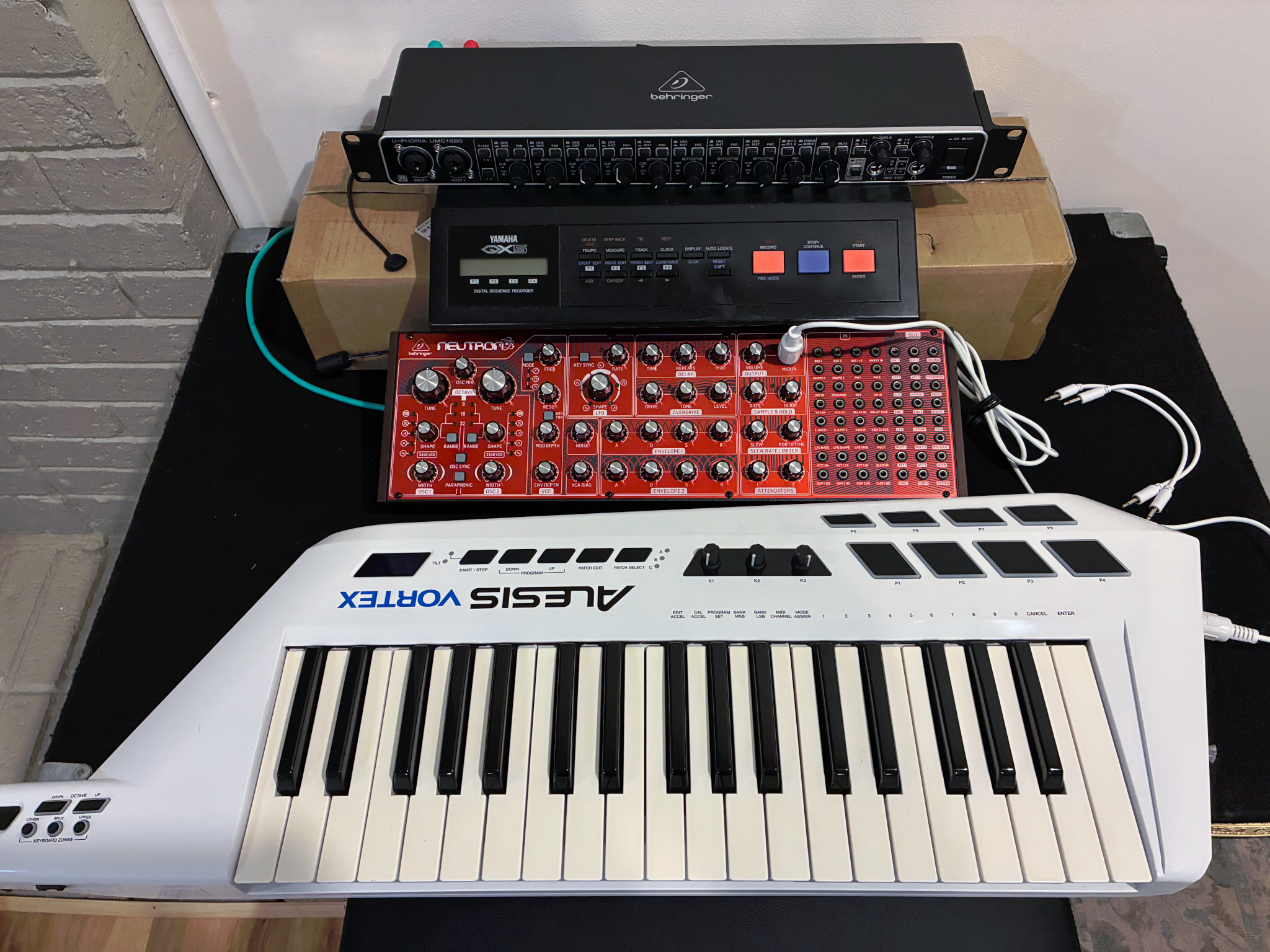
The next synthesizer for my pulse sound programming demo is my Behringer Neutron, a semi-modular analog synthesizer original to Behringer. It has signal paths hardwired internally but they can be interrupted, rerouted, and supplemented using the physical patch bay. It has no keyboard, so I’ve provided MIDI input.

Behringer Neutron synthesizer and Alesis Vortex keytar

Features:

  • Monophonic — plays only one note at a time — or paraphonic (can split the two oscillators to separate notes)
  • Monaural — one-channel audio output
  • 2 voltage-controlled oscillators (VCOs) — sine, triangle, sawtooth, square, or PWM — pitch is controlled by voltage and I don’t find it particularly stable
  • patch bay that can patch almost any signal to the control input of almost any other signal
  • 1 low-frequency oscillator (LFO) — sine, triangle, sawtooth, square — that’s hardwired to modulate VCF (and maybe more things I’m overlooking) and can be patched to modulate anything
  • 2 ADSR envelope generators that are hardwired to modulate amplitude and VCF and can be patched to modulate anything
  • Velocity received; can be configured to control VCF and can be patched to modulate anything
  • Numerous other features that I won’t use and one that I’ll describe when I do

Let’s get programming.

(more…)

Synthesizer Programming Pulse Demo: Roland JX-8P (1985)

Thursday, July 30th, 2026

The chronologically next two synthesizers for my pulse sound programming demo were to be my Unique DBE (Crumar BIT 01 North American rebrand) and Roland Juno-106, but alas, both of them have problems (the Juno had been working for the last two weeks but Sunday I left it on for a couple of hours and now it doesn’t work) that I’m going to have to delay a bit before fixing.

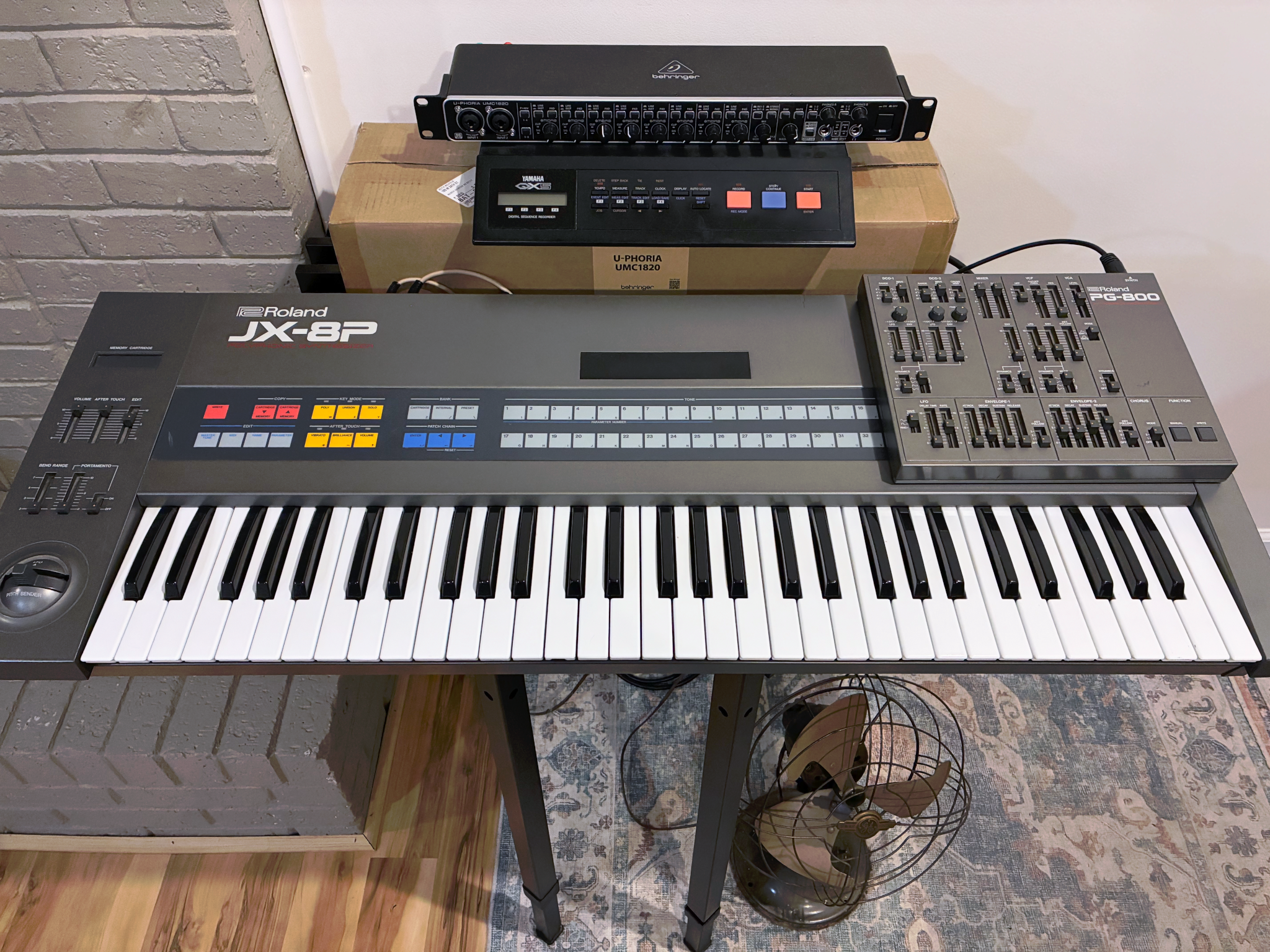
Roland JX-8P synthesizer

So on to the Roland JX-8P, my first and most sentimental synthesizer. Ken Janzen (the younger Ken Janzen) was a music whiz who’d occasionally bring his JX-8P (and sometimes sequencer) to church for special music during my formative years. Then in college I got access to another JX-8P thanks to the forward-thinking Don Kehrberg, which I ended up buying from the college a few years later. This one is my third — that is, I have three now — just picked up for a good price on Marketplace and noting some glitchy contacts that will require attention sooner or later. I love this synthesizer obviously for the nostalgia but also for the fat sounds it makes with detuned oscillators, a little bark from the VCF, and what I find to be a particularly lush chorus.

Features:

  • 6-voice polyphony
  • Stereo audio output
  • 2 digitally-controlled oscillators (DCOs) — sawtooth, PWM, square, or triangle — pitch is controlled digitally and is as solid as you want it to be
  • 1 low-frequency oscillator (LFO) — sine, square, or random — that can modulate pitch, PWM, and VCF (not amplitude)
  • 2 ADSR envelope generators that can modulate pitch, PWM, VCF, and amplitude
  • Velocity-sensing keys and performance
  • Onboard chorus

Let’s get programming.

(more…)

Synthesizer Programming Pulse Demo: Behringer Odyssey (1972 / 2019)

Sunday, July 26th, 2026

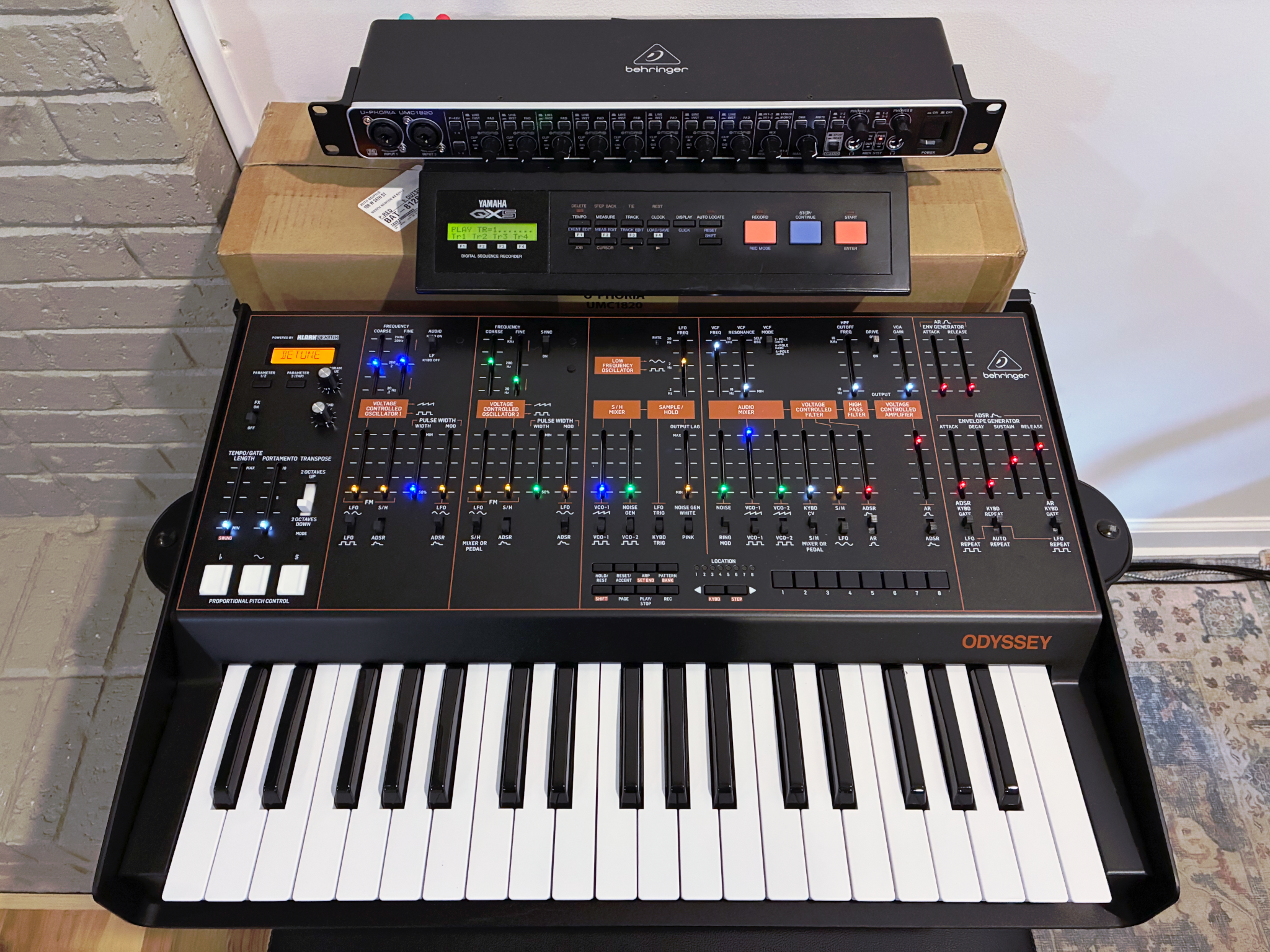
The first synthesizer for my pulse sound programming demo is my Behringer Odyssey, an analog-circuit-faithful replica of the legendary ARP Odyssey, which was first manufactured in 1972.

Features:

  • Monophonic — plays only one note at a time — or paraphonic (can split the two oscillators to separate notes)
  • Monaural — one-channel audio output
  • 2 voltage-controlled oscillators (VCOs) — PWM or sawtooth — pitch is controlled by voltage and is … variable
  • 1 low-frequency oscillator (LFO) — square or sine — that can modulate pitch, PWM, VCF, and amplitude
  • 2 envelope generators — AR and ADSR — that can modulate pitch, PWM, VCF, and amplitude
  • On the Behringer replica, velocity-sensing keys but no incorporation of the velocity in the Odyssey’s audio; for MIDI transmission only
  • Numerous other features that I won’t use and one that I’ll describe when I do

Behringer Odyssey Synthesizer

Let’s get programming.

(more…)

Synthesizer Programming: Pulse Demo Overview

Sunday, July 26th, 2026

Keith, why do you need so many synthesizers?

Well, they do different things.

I do have some synthesizers that only have built-in sounds; but the ones that speak to me the most are the ones where you build the sounds yourself. I’ve been thinking about a particular sound and how it would be made differently (and to different degrees of success) on different synthesizers and thought I’d demo that process on a representative sample of each underlying architecture.
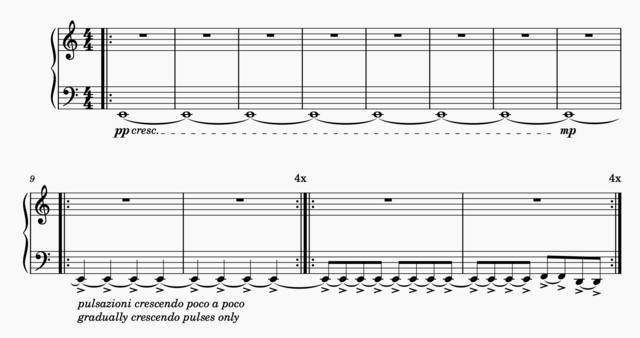
musical notation showing a held note being pulsed louder and louder

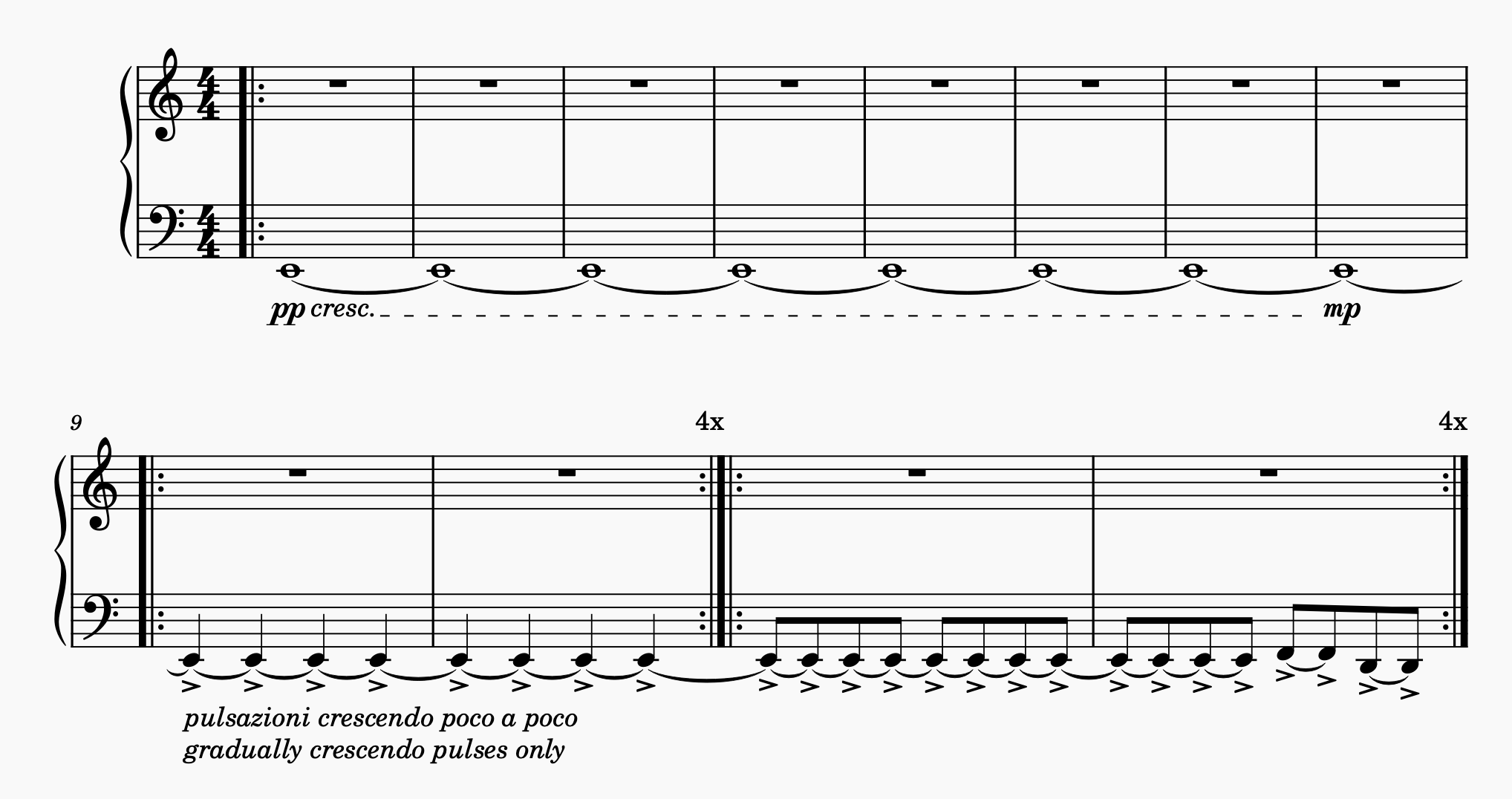
Traditional musical notation doesn’t have a clear way to capture exactly what I have in mind, so let me walk you through it: A low E is gradually faded in; then imperceptibly at first it starts getting pulses on the quarter notes, with the underlying sound held constant between the pulses as only the pulses grow louder; then the pulses speed up to eighth notes and the pitch starts changing in a repeating pattern. The measure and repeat counts are arbitrary and selected here mainly to have room to write the notations.

Further and not notated, I want the held note to be a fairly dull sound and I want the pulses to be “w-w-w” and eventually “wuh-wuh-wuh” sounds — not sharp; also dull.

What’s going to be difficult about programming synthesizers to do this is increasing the dynamic (amplitude) of only the pulses while holding the drone at a constant amplitude. Only one that I have lined up can actually do it natively and I believe only other other can do it with coaxing.

MuseScore

As a side note for the curious, that score clip is engraved using MuseScore, the zero-cost open-source music notation software. I have a fair amount of sheet music I notated years ago in commercial music notation software that went out of business and now I can’t open it and I didn’t have the foresight to export to PDF; so where I’m lucky, I still have a hardcopy I can find and where I’m unlucky, it’s locked away and I don’t expect to be able to get it back.

From time to time I’d look for an open-source replacement and kept finding MuseScore but never did anything with that information until earlier this year, when I needed to do more music notation, installed it, and love it. It’s fairly easy to use; it does gorgeous typesetting; and it gives you control over every tiny little detail of the typesetting.

If you’re looking to try it, I highly recommend keeping it open in one window and Gemini open in another. When you want to do something, just ask Gemini how. It’s infinitely patient and often correct. Very good for instructions on basic operations; nearly useless for deep menu diving for fine-tuning typesetting.